
When the thermometer exceeds 30 degrees, work in the office, warehouse or factory floor can become torture: FIVE WAYS TO DEAL WITH THE SUMMER HEAT
Although it is nice to enjoy summer temperatures by the lake or in your own garden, it is difficult to work in such conditions. Heat can affect the health and safety of employees. When concentration and performance decline, headaches and nausea are often the consequence, as heat stress can lead to fatigue, fainting, disorientation and other dangers that can affect safety in the camp. DGUV Information 213-022 helps assess heat situations in the workplace.
The Workplace Ordinance (ArbStättV), in conjunction with Section 3.5 of the Technical Rules for Workplaces (ASR), regulates the conditions under which sweating is permitted at work. Accordingly, there must be a health-promoting temperature in work rooms. The ASR A3.5 distinguishes between two types of temperature:
– The room temperature is the temperature perceived by humans and is determined, among other things, by the air temperature and the temperature of the surrounding surfaces (windows, walls, ceiling and floor).
– Air temperature is the temperature of the air that surrounds people, without the influence of thermal radiation.
» ASR A3.5 room temperature
The ASR A3.5 recognizes three temperature thresholds for air temperature: 26, 30 and 35 degrees. As a general rule, the temperature in work rooms should not exceed 26 degrees. A room temperature of more than 26 degrees is only permitted if companies and offices have good insulation against summer heat, windows and glass walls have sun protection and the outside temperature exceeds 26 degrees. According to BAuA, if the temperature exceeds 35 degrees, the room is no longer suitable for working.
Our team at SETON has put together a list of summer storage safety tips.
1. Safety starts with people: What can the employee do?
Drink enough– Experts recommend drinking two to four glasses of water every hour to stay hydrated while working in high temperatures. Heavy sweating depletes your body of salt and minerals, so it’s a good idea to bring a sports drink to work to replenish electrolytes.
Work/rest cycle – Talk to your employer about taking frequent breaks in air-conditioned spaces. Develop a work schedule together that gets the most strenuous work done before 11 a.m. or after 4 p.m. At this time the temperatures are lowest.
Light clothing – Breathable, loose-fitting clothing helps the body stay cool. Nevertheless, the necessary PPE in the workplace must not be dispensed with
» Safety helmets and bumper caps
Cool down with damp cloths– If you feel like you are overheating, wipe your face with a damp cloth or place it on your neck to cool down.
Avoid drinks containing caffeine– Tea, coffee, energy drinks and caffeinated soft drinks can contribute to dehydration.
2. Cool it down: Create a pleasant working atmosphere
Keep office spaces, production halls and warehouses cool by setting up fans or air conditioning units. Make sure the building is well insulated and encourage employees to keep windows and doors closed so that cool air doesn’t escape and the heat stays out.
» Heaters and air conditioners
3. Control the shelf risk factor
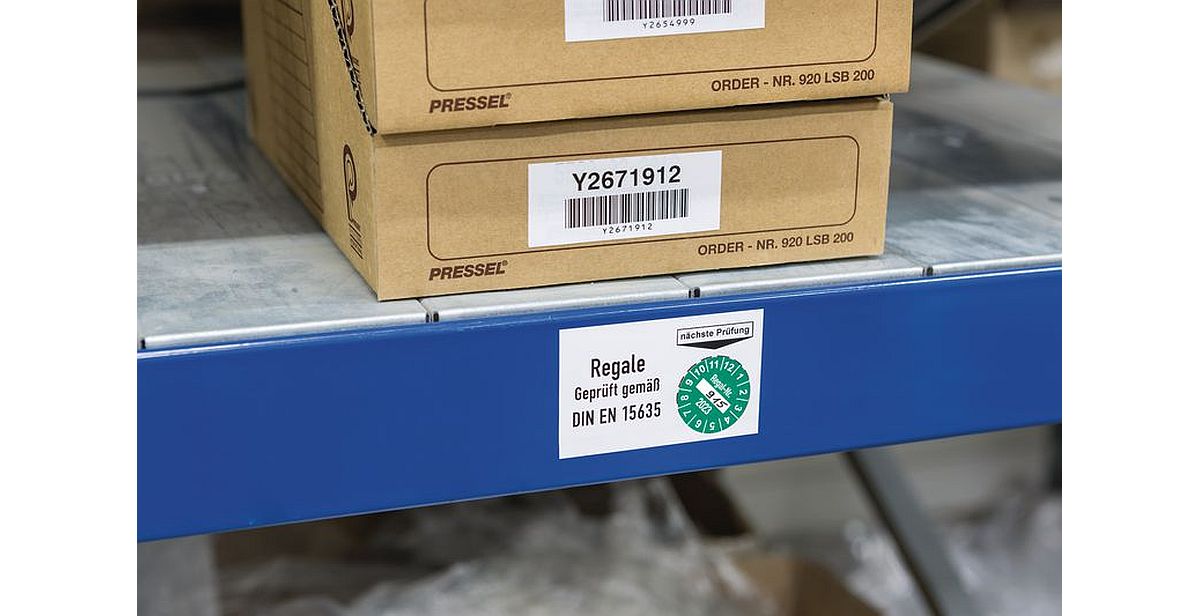
A large proportion of all accidents in the warehouse are caused by inadequately secured shelves. This risk can be significantly reduced through careful planning of the racking systems.
Metal shelves should never be left in the sun. They quickly heat up to the point where they can burn someone, and they also burn certain types of products. Metal shelves are well suited for interiors where it is cool because they also retain their coolness and pass it on to the stored product.
The main reasons why shelves are a risk factor are incorrect placement, inadequate fastening and improper use. Overloaded shelves can quickly break and falling objects can cause a chain reaction. Therefore, shelves that are part of the storage facility must be subjected to a weekly visual inspection and verifiably an annual inspection.
» Shelf labeling, warehouse labeling
4. Efficient operations
Ensure that the machines in production and warehouse run efficiently. This camp safety precaution applies to all seasons, not just summer. However, summer heat combined with the friction of a conveyor belt can cause temperatures to rise faster than normal. Check conveyor belts regularly to make sure it is not overheating or causing too much heat.
Checking your warehouse stocks and proper inventory control also lead to more safety and productivity in the warehouse. Find ways that could improve air circulation or make production easier in the summer months.
» Equipment and shelf security
More about ladder testing
More about shelf testing
5. Assess whether heat work is occurring (observation method)
With this checklist, based on DGUV Information 215-510 for assessing the indoor climate, and DGUV Information 213-002 – Recognizing – Assessing – Protecting Heat Work, you can check how severe the heat stress is in a workplace and what measures need to be taken.
| Condition | Check | remark | Possible measures (examples). | |
| Air temperature | 18°C to 26°C |
self-responsible | ||
26°C until 32°C |
if necessary. Analyze |
• Localization of heat and cold sources • Elimination of hot or cold air sources • Insulate hot surfaces • Local extraction of hot air or cold air • Ventilation while avoiding drafts • Use of suitable sun protection devices such as external blinds or awnings, blinds between the windows • Use of clothing with lower or higher insulating properties |
||
32°C until 40°C |
(DGUV information 213-002) |
• Supply of cooler air • Increased air speed, e.g. air showers • Air cooling • Water cooling of surfaces and systems • Heat radiation protection • Reducing the severity of work • Cooling down phases for employees |
||
40°C |
(DGUV information 213-002) |
|||
| Humidity | up to 60% |
|||
or relative humidity over 60% |
with high Air temperature → Danger of heat |
• Elimination of steam or water leaks • Suctioning off any moist or steamy air that arises • Encapsulation of water-cooled surfaces or evaporation surfaces • Use of water-repellent but vapor-permeable clothing |
||
or relative humidity over 80% |
with high Air temperature → Danger of heat |
|||
| Heat radiation | 2 until 3 minutes |
if necessary. Analyze |
• Reduction of (radiating) surfaces • Use of reflective shields • Insulation or treatment of (radiating) surfaces • Arrangement of the workplace away from (emitting) radiating surfaces • Use of special radiation-reflecting protective clothing • Use of suitable sun protection devices when the sun is shining through windows, such as external blinds or awnings, blinds between the windows |
|
over 2 minutes |
if necessary. Analyze |
|||
if necessary. Analyze |
||||
| Air movements | no drafts | if necessary. Analyze |
• Reduction or elimination of drafts • Low-turbulence air flow • Adjustment of the supply air outlets • Setting the supply and exhaust air quantities • Use of panels to provide local protection from drafts • Arrangement of the workplace in areas without drafts |
|
Hot air movements |
if necessary. Analyze |
|||
Hot air movements |
if necessary. Analyze |
|||
| Work-heavy | control and tax activities, low muscular constraints |
|||
arm and leg work, use of heavy machinery, constant walking |
||||
strenuous arm and body work, handling heavy objects, shovels, wood cutting, fast walking or when wearing a heavy burden |
check the workload or measure if necessary. Analyze |
• Reducing the speed of movements (working speed) • Reduction of lifting and transport distances • Reduction of load weight • Use of mechanical aids to reduce work severity • Optimization of postures • Increased range of motion • regular change of work task |
||
stressful physical work at high speed |
check the workload or measure if necessary. Analyze |
|||
| clothing | not hindering work |
|||
difficult, hindering work |
lighter clothing possible or Measure if necessary Analyze |
• Improvement of clothing properties • Improving wearing comfort • adapted insulation effect • Selection of breathable materials • Selection of lighter materials |
||
with heat radiation, humidity, Chemical exposure or cold temperatures |
lighter clothing possible or Measure if necessary Analyze |
» DGUV Information 215 – 510 – Assessment of the indoor climate
» DGUV Information 213-002 – Heat work Recognize – assess – protect
Миналата година осъществих пътуване с Мистрал Травел и останах много удовлетворена! Планирането беше безупречна – от резервацията до самото пътуване. Избрах екскурзия до Златна Прага и всичко беше изпълнено с професионализъм – мястото за настаняване беше комфортен, гидът много компетентен, а програмата интересна и добре структурирана. Благодарение на тях имах възможност да се потопя на атмосферата и красотата на града без никакви грижи. С удоволствие бих се използвала услугите на Мистрал отново и препоръчвам на всички да заложат на техните предложения!